Before You Conceive: Inside the Mind of a Donor-Conceived Adult
Hear from donor-conceived adult Nick Ludwig about his journey, the importance of transparency, and what intended parents and donors can do to prioritise a donor-conceived child’s wellbeing.

Written by
Sofie Hafström Nielsen
Published on
02 Sep 2026
Donor conception is about more than how a child is conceived. On his 36th birthday, Nick Ludwig unwrapped a 23andMe DNA kit. He had no idea that opening it would completely redefine his identity, revealing 13 donor-siblings he never knew existed. Today, Nick is the host of 'The Inconceivably Connected Podcast' and author of 'Inconceivably Connected: A True Story of Shocking DNA Results and Chasing the Unknown'.
We sat down with him to discuss how intended parents and private donors can navigate transparency, avoid secrecy-driven trauma, and prioritize the long-term well-being of the children they bring into the world.
Tell us a little bit more about your own journey as a donor-conceived person
My name is Nick Ludwig, and when I was 36, I discovered that I'm donor-conceived. It happened to be my birthday, and my two younger siblings bought me a 23andMe testing kit as a birthday gift. When my parents found out, they froze. Before I received it, they sat me down and told me there was a chance the results might be surprising. I was in shock, wondering how they had carried this truth for so long without sharing it with me.
I checked in with them to understand how they were feeling after harboring this for 3+ decades. We came to a place where they knew that my love for them hadn't changed, but despite it not changing anything, it also changed everything. I found out that I am one of 14 donor-conceived people connected through the same donor. Through my ancestral breakdown, I discovered that I'm half Ashkenazi Jewish. Prior to this, I never knew I was Jewish at all.
What struck me most was understanding that I have all these siblings that I was completely unaware of. Who could they be? What do they look like? What are their interests? What are their personalities like? I was very curious about that and wanted to explore as much of it as I could.
When I got the results, I didn't have the identity of the donor, but I quickly found out who he is. About an hour later, one of my half-sisters messaged me on 23andMe: "Hey, I know you've probably just received a lot of information, but if and when you're ready, I have more I can share with you." So I got most of the information I needed up front. I was able to identify the donor. There was an email that he wrote to one of the half-sisters explaining our medical and family history. It wasn’t in great detail, but in terms of the necessities, I felt like I had enough. That said, there was plenty more that I wanted - and still want.
What led you to start The Inconceivably Connected Podcast?
I met up with the half-siblings - at least the ones that were interested in meeting. I later wrote a book about my experience titled Inconceivably Connected: A True Story of Shocking DNA Results and Chasing the Unknown, and eventually I launched The Inconceivably Connected Podcast, a space for donor-conceived people to share their own stories of how they found out, and what that's meant for them.
Three years ago, none of this was on my radar. I never expected to be hosting a podcast, having written a book, and talking to you guys now. But I like to roll with the punches, and here we are.
With almost 60 episodes and so many unique stories, what has surprised you the most?
It's the incredible range of experiences people have. I never know whether I'll be speaking to someone whose discovery changed their life for the better or someone whose world was turned upside down by it. Some people feel like their whole world has shattered, their family fell apart, and connections to the people that they've been closest to have disintegrated. I've also spoken to people who say everything finally made sense once they discovered they were donor-conceived, and the new connections. They were really excited, and it’s a happy story.
No two stories are completely alike. There's always a uniqueness to each of them. That goes for everybody involved, not just the listeners of the episodes, but for me as the host and even for the guests themselves.
Guests might reach a point in their storytelling where they say something out loud that they've never even thought of before, simply because this space now exists. They feel comfortable enough to go to a place where they're being a little bit more vulnerable.
I don't know what I'm about to walk into every time I sit down with a guest, and that's part of what keeps me going.
After speaking with so many different people, what are the most common things donor-conceived people wish their parents had done differently?
Anyone who finds out later in life wishes, on some level, that their parents had told them earlier. There's nuance to that, though, because ‘earlier’ can mean a number of things. I found out when I was 36, but do I wish I found out when I was 21? I don't think that would have been the appropriate time. It could have been very helpful to have been told when I was five or six years old, as a child, when this isn’t going to suddenly rock my world. Instead, it can be introduced as just part of the natural growth path.
If you're a donor-conceived person who has donor siblings, it opens the door to establishing real relationships with them during your formative years. It can be really helpful to have had those connections from the earliest point possible. Now I'm grateful. I love that I have these connections, and I don’t wish for anything different.
What are some examples of choices or behaviors that donor-conceived people generally speak positively about?
Transparency from an early age. There's no expiration date on being transparent. If you haven't been open and honest, it doesn't mean that you can't become that way, and it doesn't mean that there's no value in becoming that way if you haven't been that way already.
My own parents kept this truth to themselves for the first 36 years of my life. But when the truth came to light, they owned it. They became more open and honest about everything. When parents do that, I'm able to respect them very deeply because it shows they're willing to change and adapt after doing something one way for decades.
I think that's really important for donor-conceived people: to have that acknowledgement from their parents that, "Maybe we got this wrong by not telling you earlier, or at all. But now the truth is here, and now we can talk about it. And now we are available to you, if you have questions". There's so much value in that. It gives the relationship a chance to not only heal, but to grow back stronger.
If recipient parents go the other route and say, "You can't tell anybody this is our secret," it's going to create resentment and make communication more challenging. DNA doesn't lie. If parents continue to act as though it’s either no big deal or deny it outright, you're not doing anyone any favors by responding that way. If anything, it can become even more harmful for the donor-conceived person.
There are many different voices within the donor-conceived community. Where do you see the biggest differences in opinion?
Most of us are in agreement about what needs to change in the future. One of the biggest is donor anonymity. We all deserve the right to know where we come from. It should be a basic human right to have access to that information.
One area where I have seen some notable differences is that there are people who believe sperm and egg donation shouldn't exist at all. I'm not in that camp. If it didn't exist, I wouldn't be here. Those views often come from people who have had really difficult experiences and were brought into families that weren't nurturing or didn't express love in the ways they needed. Because of that, it can create the belief that donor conception shouldn't exist at all.
Our community is mostly on the same page about what our needs are. That includes an accurate medical and family history. We should also be able to access information about our donor's profession, personality, and interests. That doesn't mean there has to be a relationship, but we should have a clear picture of who we come from.
I spent a grand total of one hour without that information, and during that hour I couldn't think straight. I felt totally disoriented. Some people go months, years, or even decades without knowing where they come from.
At Y factor we connect intended parents with private donors. Have you noticed any differences in the experiences of those conceived from private donors versus sperm bank donors?
I've spoken to people whose biological father is a known person in their life. Anyone who has open contact with their donor, whether that's simply having access to information or a full-on relationship, almost always seems to benefit from it. Some of the most positive stories I've heard are the ones where the donor-conceived person has been able to form meaningful bonds and relationships with their donor. Whether that's sending texts every now and then, having phone calls, or simply becoming friends and spending time together, those are the stories that often seem to have the happiest endings.
If we can lean more in that direction, not necessarily where the donor is involved in everyday life, but where they're able to say, "If you need answers, if you want to know more about my background, my family, or my extended family, that information is available," then we're moving towards a form of donor conception that works better for everyone. The donor is a big part of that, but recipient parents need to adopt that mindset as well.
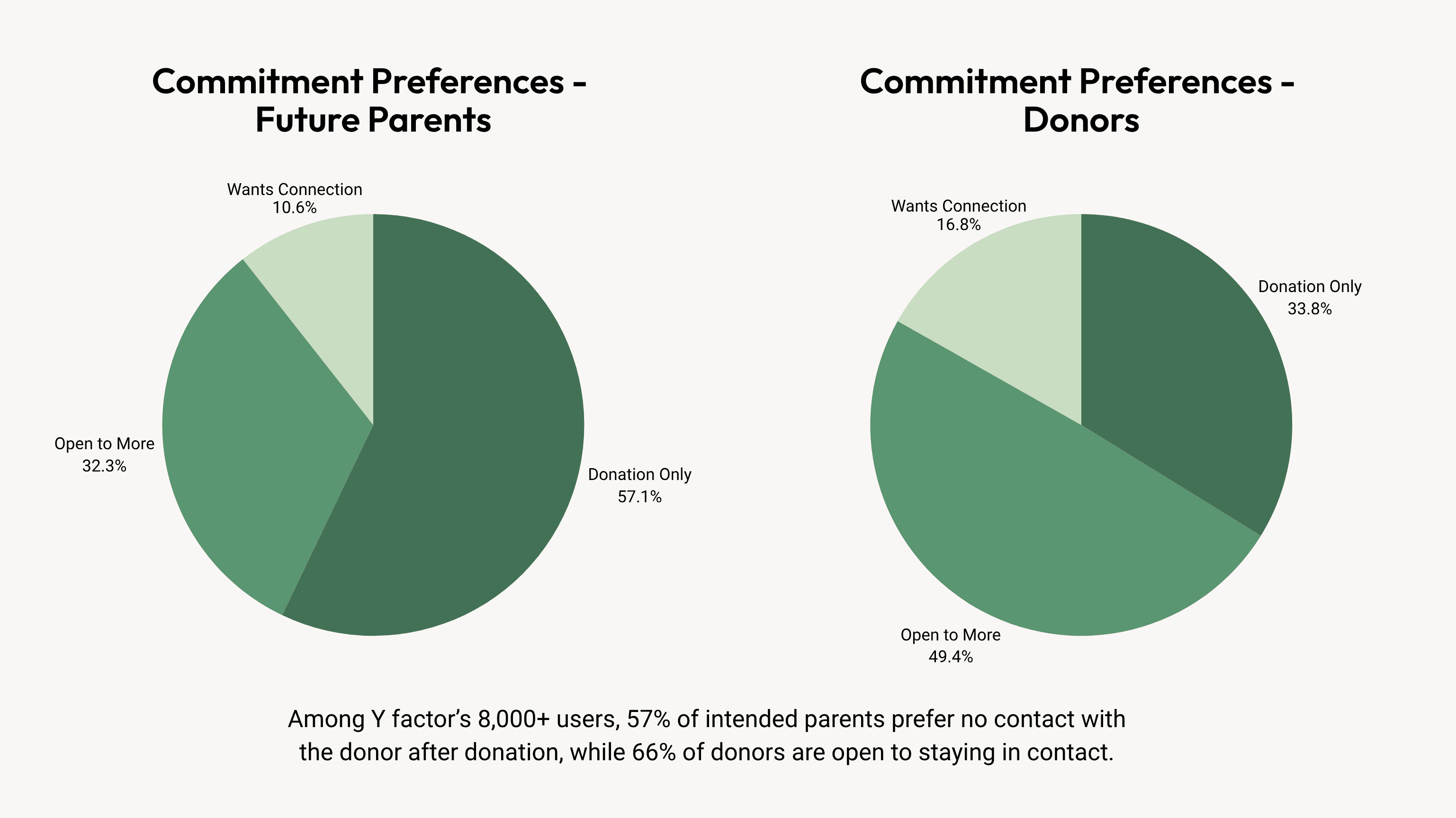
What questions do you think intended parents choosing sperm donation or sperm donors choosing private sperm donation need to consider to take care of their future child’s wellbeing?
Take the spotlight off of themselves for a second and think about the child that they're bringing into the world. It's easy for donors to say to themselves, "Well, I'm helping these aspiring parents out". In this case, the donor should be thinking, "How can I help this child that the parents are bringing into the world? What can I do to make an easier path?
From the parents' perspective, they can get wrapped up in the idea of, "We're going to become parents. This is so exciting." And it is. But it's also important to prioritize the needs of the child. What the parents can do is create an environment and a space that is open, honest, and free; there's nothing to hide. I think the matter of donor conception back in the 80s and 90s, and to an extent today as well, is a taboo subject.
We need to normalize talking about it so we better understand the experiences of donor-conceived people, and so parents don't feel like this is something they have to bottle up. If parents feel comfortable telling their children at an appropriate age - around four or five years old - you remove the potential shock factor. And it's such a preventable thing. If we take a few simple steps from an early age, we can normalize donor conception and make it just another part of their story.
If every intended parent and every donor using Y factor heard just one message from you before moving forward, what would you want them to hear?
Just be open in general. Go out and explore, see what the world has to offer. Lean towards exploration because there are so many rewards that are potentially out there. For the donor and the recipient parent, be open to the fact that your donor-conceived child may well want to explore too.
The problems tend to come when one person wants to take that route, and someone else says, "I'm not okay with that." That's where friction begins. But if you're all on the same page, embracing the journey and allowing whatever happens naturally to unfold, that's all you can really do. Beyond that, create an environment where the child you're bringing into the world is surrounded by love, encouragement, and the things that make for a positive upbringing. Be open, and be mentally prepared for things that are unpredictable or unforeseen.
Don't lean into the fear. Lean into the love. You can boil a lot of this down to love and fear. Openness is on the love side. If you're leaning towards fear, trying to bottle things up, you've got to find a way to move towards openness, honesty, transparency, and a willingness to explore the unknown. Once you step into the unknown and peek behind the curtains, you realize there wasn't really that much to be afraid of to begin with.
Nick’s experience highlights the value of openness, honesty and considering the future child’s perspective from the very beginning. If you’re exploring private sperm donation, Y factor helps future parents and private donors connect based on shared values and donation expectations - allowing you to make informed decisions together. Listen to the full interview with Nick on Spotify.
Latest
From the blog
The latest industry news, interviews and resources.
Insights
What Online DNA Testing Means for Private Sperm Donation - Guest Blog

What does online DNA testing mean for private sperm donation? Professor Lucy Frith, Professor of Bioethics and Health Research at the University of Manchester, explores anonymity, donor siblings, donor identification, and the implications of consumer DNA testing for donors and future parents.
Anonymous
08 Jul 2026
Insights
Donor Anonymity and its Impact on Donor-Conceived Children
How donor anonymity, open‑ID and known donors shape identity, information and family stories for solo mums and LGBTQ+ parents
Anonymous
26 Mar 2026

Grow families, your way
© 2026 Y factor. All rights reserved.


