How to Improve Your Chances of Finding the Right Sperm Donor Match on Y factor
Profile tips that can make it easier for the right donor to find you, get an understanding of who you are, and want to connect.
Written by
Sofie
Published on
29 Sep 2026
How to Improve Your Chances of Finding the Right Sperm Donor Match
Finding a match is mutual: while you might have found donors you’re interested in connecting with and started giving likes, the donors also need to look at your profile and decide that they’d like to connect with you.
A stronger profile is not about attracting the most donors. It’s about helping the right donors recognise a potential fit sooner.
Your profile can make that decision easier. The more clearly it reflects who you are, what you’re looking for, and what matters to you, the easier it is for potential donors to decide whether there could be a fit.
Here are some practical ways to strengthen your profile.
1. Fill out your profile
A profile doesn’t need to contain everything about you. But an almost empty profile gives a potential donor very little to base their decision on.
Our data shows a clear association between profile completeness and both the number of likes you receive and your likelihood of matching. Profiles that are 80–100% complete receive almost twice as many likes, compared with the lower completion levels.
Take a moment to review your profile and fill in the information you’re comfortable sharing. The following sections cover some of the areas that can help potential donors understand you better.
The goal isn’t to appeal to everyone. It’s to give potential donors enough information to understand who you are and decide whether there could be a fit.
2. Tell donors who you are
Your About section is one of the best places to make your profile more personal. Future parents with an About section receive around 70% more likes, compared with those without one. That doesn’t mean writing a bio will automatically result in more likes, but there is a clear association between having one and receiving more interest.
Keep it honest and relatively concise. You could include:
A little about you and your life
Why you’re looking for a private donor
What matters to you
What kind of relationship or arrangement you hope to have with a donor
A few interests that give someone a sense of your personality
Example bio: Hi! I’m a 38-year-old solo mother-to-be based in New York. I work as a lawyer, and I'm ready to start a family on my own. I’m looking for a private donor because I’d like a more personal process where I can get to know the donor, understand what matters to them, and have more control over finding someone who feels aligned with my values. I value honesty, stability, and clear expectations, and I’m looking for a donor who feels aligned with that. Outside of work, I enjoy long walks with my dog, cooking, and spending time with close friends and family. I’m organised and thoughtful by nature, and I’ve approached this journey with the same mindset. Happy to connect if this resonates.
You don’t need to share sensitive or identifying information publicly. More personal conversations can wait until you’ve matched.
3. Add useful profile details
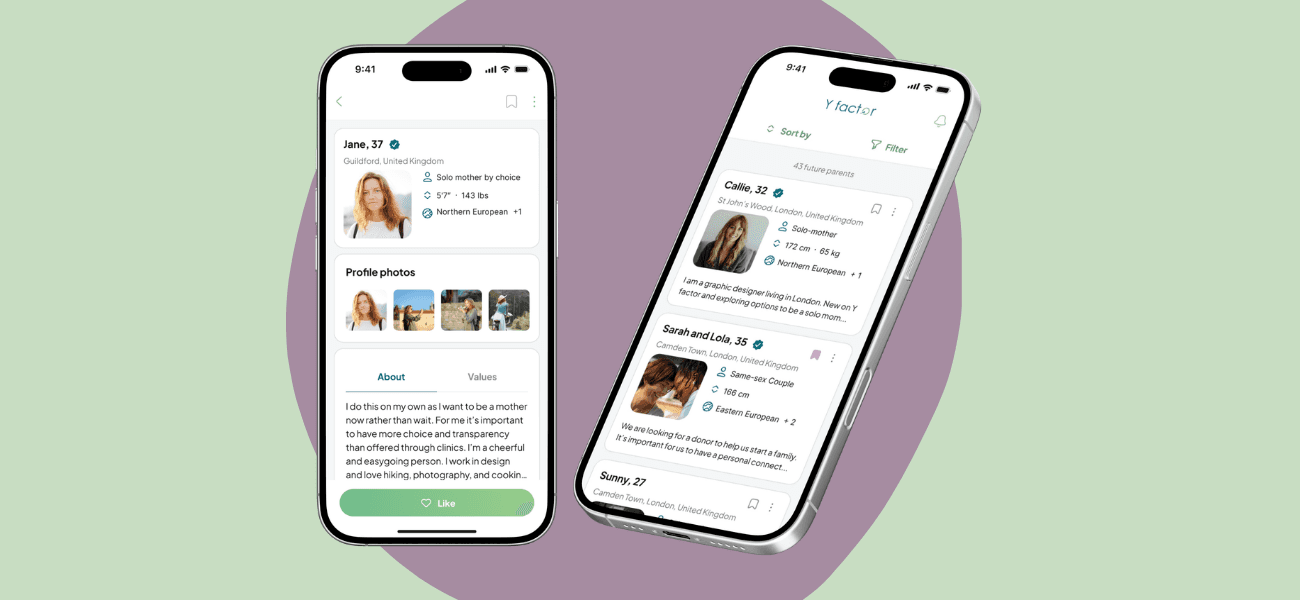
Once someone is interested enough to open your profile, the details you include can make it easier for them to understand who you are and whether there could be a fit. Different parts of your profile help donors answer different questions about whether they might want to connect. Details such as photos, ID verification, occupation, education, relationship status, activity level, smoking and drinking habits, height, hair colour, eye colour, and values are all associated with more likes.
Help donors understand what you look like If you’re comfortable sharing photos, choose recent, natural images that represent you well. Putting a face to the profile helps donors get an idea of who they might be connecting with. Other physical details such as height, weight, hair colour and eye colour can also give donors more context, particularly if you prefer not to share photos.
Give more context about your life Details such as your occupation, education, relationship status, values, activity level, and smoking and drinking habits can give donors a better sense of the kind of person you are, how you live, and what matters in your everyday life.
Give donors an additional trust signal You may also want to complete ID verification. This gives donors an additional signal that the person behind the profile has verified their identity.
You don’t need to complete every field, but it’s worth reviewing the parts of your profile that help give a clearer picture of who you are. The aim isn’t to share more than you’re comfortable with. It’s to give potential donors enough information to make a more informed decision about whether they’d like to connect.
4. Set clear preferences
Your preferences help determine which donors are relevant to you and which potential matches make sense. Be deliberate about your choices on preferred donation method(s), compensation, and the type of commitment(s) you would consider from a donor. Only select options you would actually consider.
Being too broad may increase the number of potential matches, but it can also lead to conversations with people who want something you are not interested in. A smaller number of relevant matches is more useful than more matches based on incompatible expectations.
The goal of setting preferences is not to maximise matches. It’s to make sure your profile accurately reflects the arrangements you would seriously consider, so that when you do match, the conversation is worth having.
5. Share health information carefully
Health information can be important when evaluating whether a potential match is suitable, but that doesn’t mean you need to put sensitive details on your public profile.
If there are relevant hereditary conditions, fertility considerations, or other health information you think a donor should know, you can indicate that there is something you’d like to discuss once you’ve matched.
The important thing is transparency at the point where the information becomes relevant. You can use the chat to share more detail and ask the donor about their own health and family history before deciding whether to take things further.
6. Avoid mixed signals
A strong profile is not about presenting yourself in the most appealing way possible. It’s about giving potential donors an accurate picture of who you are and what you’re looking for.
Leaving your profile too empty: A relatively limited profile gives donors little to evaluate on, and can waste time for both you and the donor
Misleading or vague information: Honesty builds trust. Ambiguity or dishonesty can create mismatched expectations and frustrating conversations
Sharing sensitive or identifying information on your profile: Keep personal details for private conversations after you’ve matched.
Be open and accurate, while keeping sensitive or identifying information for private conversations after you’ve matched.
Focus on the right matches
A strong profile won’t make every donor interested, and that isn’t the goal.
The aim is to help the right donors understand who you are, what you’re looking for, and whether there could be a fit. The clearer and more complete your profile is, the easier it becomes to avoid mismatched expectations and focus your time on conversations that are actually worth having.
Take a final look at your profile, update anything that feels incomplete or unclear, and keep exploring with quality rather than quantity in mind. The more thought you put into completing your profile, the better your chances of connecting with the right people.
Read our guides: How Private Sperm Donation Works: A Step-by-Step Guide and Choosing Your Ideal Sperm Donor to get better prepared for private sperm donation.
Good luck, and happy matching on Y factor!
Latest
From the blog
The latest industry news, interviews and resources.


Grow families, your way
© 2026 Y factor. All rights reserved.


